Rustic, Not Rustic-Themed
How my approach to rustic food photography has changed
I've always loved rustic food photography. For years, I enjoyed creating scenes with old utensils, wooden surfaces, linen, scattered ingredients and plenty of texture. I liked the feeling of a table that had been used, the little imperfections and the sense that something had just happened there.
For a while, that style was everywhere in food photography. Many of us contributing to Unsplash+ were creating our own versions of it, and eventually the direction started to change. The briefs became cleaner and more minimal, and at one point even wood backdrops were no longer wanted for some of the work.
So I adapted.
Looking back, I think that was a useful part of my development as a photographer. When I couldn't rely on the familiar language of rustic styling, I had to think more carefully about what was actually important in an image. What did the prop contribute? Did the texture have a purpose? Was I creating atmosphere, or was I simply adding things because they looked rustic?
Now I'm starting to see the word rustic appear again in some briefs, particularly around Thanksgiving and other seasonal food. I'm excited about that. I still love the warmth, texture and imperfection that rustic styling can bring.
But I don't want to simply recreate the rustic images I was making three years ago.
I think rustic can come back in a more considered way.
When rustic becomes too decorated
When I look back at some of my older work, I can see how easy it was to keep adding things because they looked right for the style.
An old utensil, a piece of linen, some flowers, a wooden surface, ingredients scattered across the table. Each element could look beautiful on its own, but together they could sometimes become a little too much. The photograph starts communicating "rustic" through every possible visual cue, rather than allowing the food and the story to do some of the work.
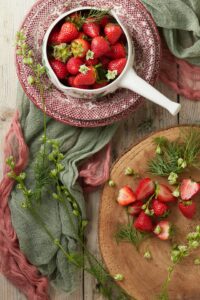
An example of the more heavily styled rustic food photography I used to create.
This strawberry image is a good example of something I would approach differently today.
I still like the individual elements, but I wouldn't necessarily put cut strawberries directly onto a raw wooden surface while supposedly preparing the food. The scene is constructed to look rustic, rather than following the logic of what someone would actually be doing.
That distinction has become much more important to me. Food photography is full of decisions and careful placement. But I want the construction to support a believable story.
Let the story decide the styling
This is probably the biggest change in how I approach rustic food photography now.
If I'm photographing someone actually making something, I want the styling to make sense within that action.
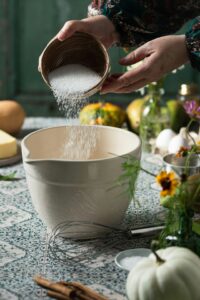
When photographing a process, I want the styling to make sense within the action.
I really like this image, especially the framing and the flowers in the foreground. But looking at it now, I would approach the styling differently. The bowl, sugar, ingredients and baking tools have a natural relationship with what is happening in the scene, so they feel believable. The flowers and white pumpkin in the lower right feel more like they have been placed for the photograph. They make the foreground beautiful, but I can't quite imagine someone actually working with those elements positioned there. The pumpkins in the background, on the other hand, feel much more natural. They add to the seasonal atmosphere without interfering with the action.
This is something I think about more now when styling a process shot: the scene can be carefully constructed, but it still needs to make sense as a place where someone could actually be working.
I want to be able to look at the photograph and believe that someone could actually have been standing there making the food.
That doesn't mean the scene has to be perfectly realistic. Food photography is still photography, and we're creating an image rather than documenting a kitchen. But there is a difference between something that looks like cooking and something that feels like cooking.
That is the feeling I'm interested in now.
The rules change a little when the food is finished
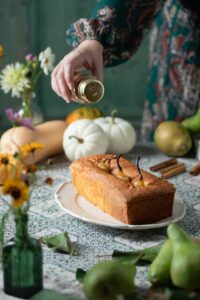
A finished dish gives me more freedom to create the world around the food.
The rules change a little when the food is finished. A finished dish gives me more freedom to create the world around the food. A finished cake doesn't need to be surrounded only by the things that were used to make it. Once the cooking is over, I can create more of a setting around the dish, using seasonal fruit, flowers, linen, bottles or other decorative elements to establish a sense of occasion.
Those elements don't need to pretend that they were part of the baking process. They are there to tell us something about the setting, the season or the mood. This is where I think a rustic Thanksgiving or Christmas brief can support much more visual richness than a photograph showing someone actually preparing the food. The styling has a different job.
A finished dish can be the center of a more decorated environment because the environment is helping tell the story of the finished food. That distinction gives me much more freedom, and it doesn't mean I have to reject decorative styling altogether. I just want the elements to have a reason for being there.
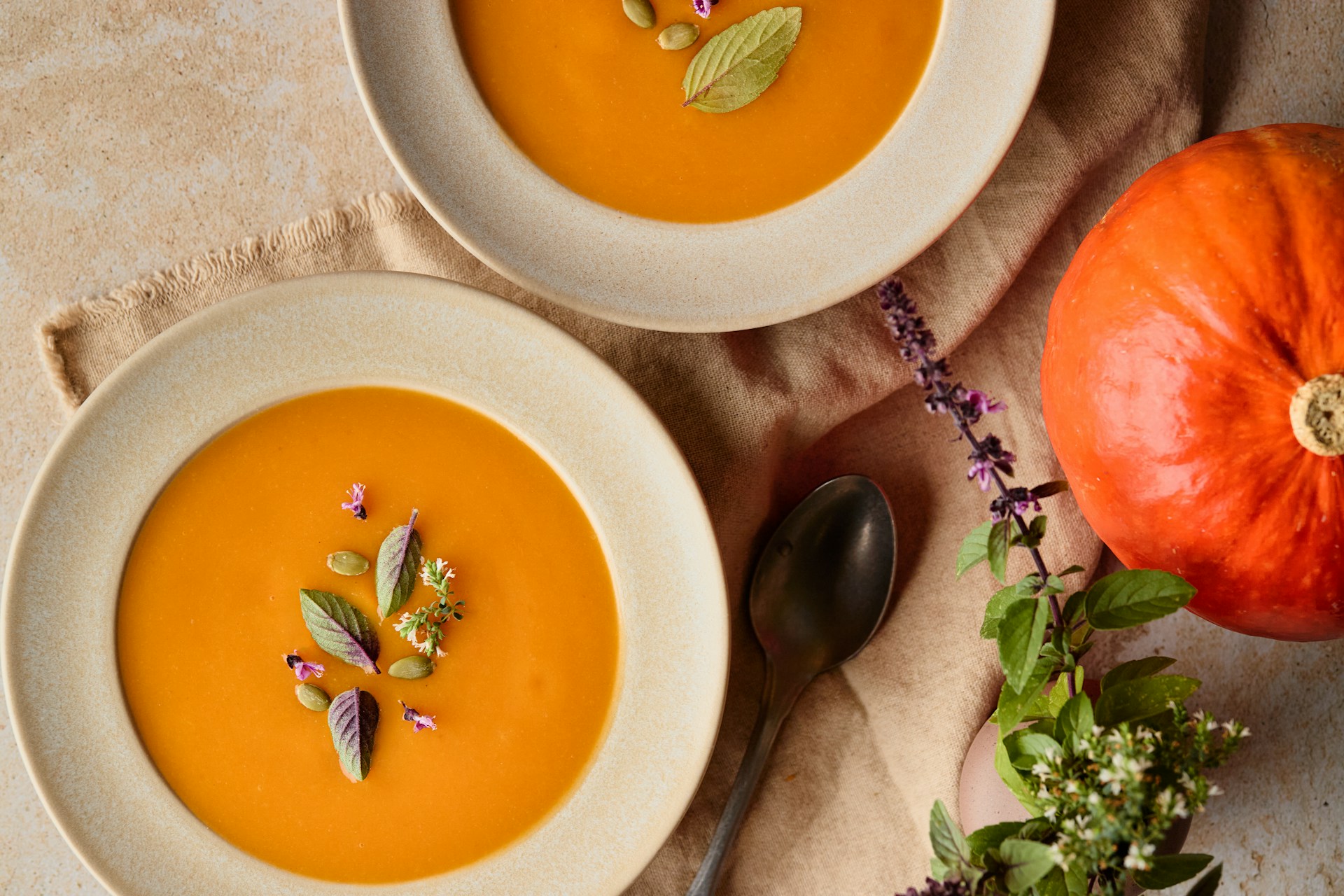
Rustic should feel lived-in
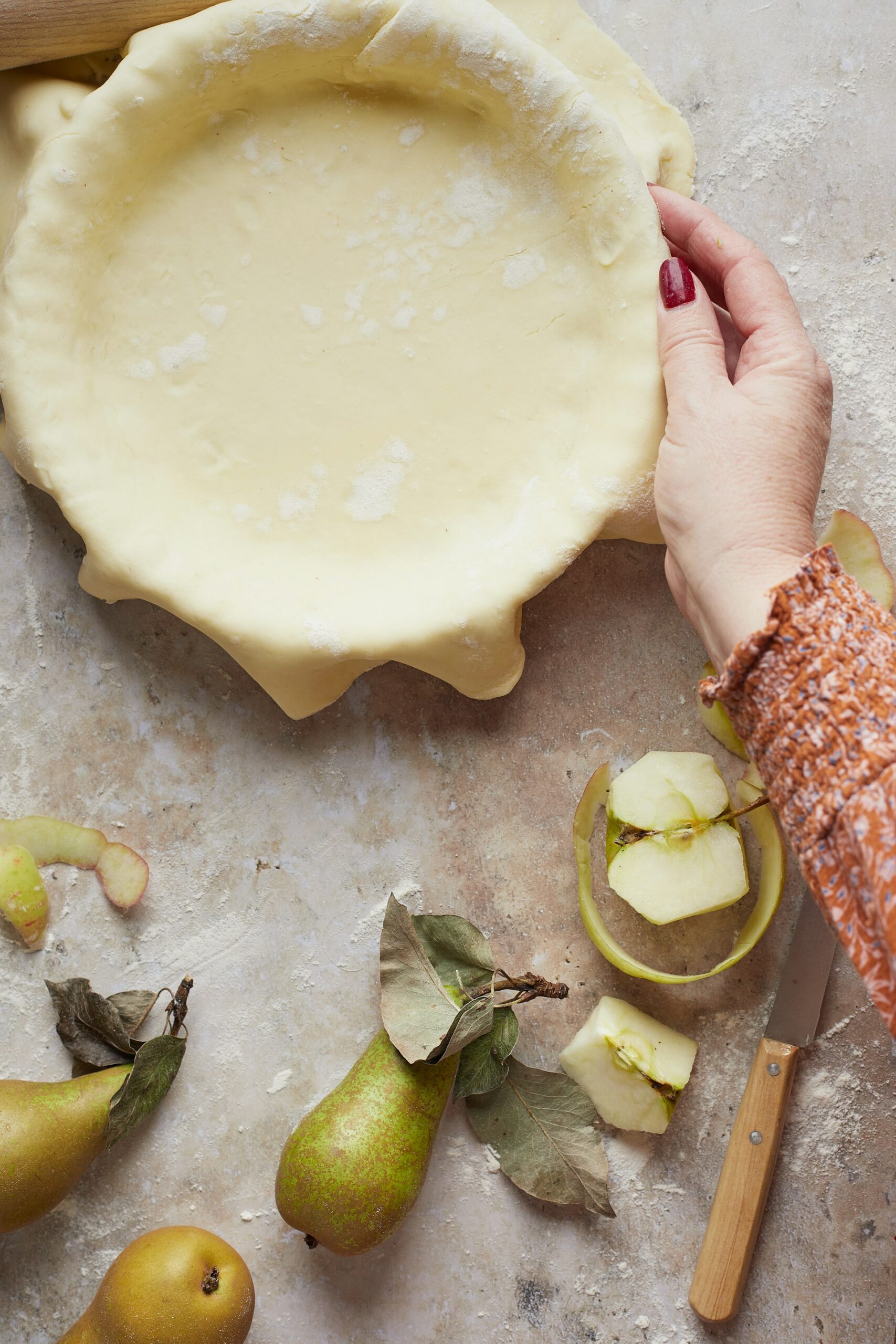
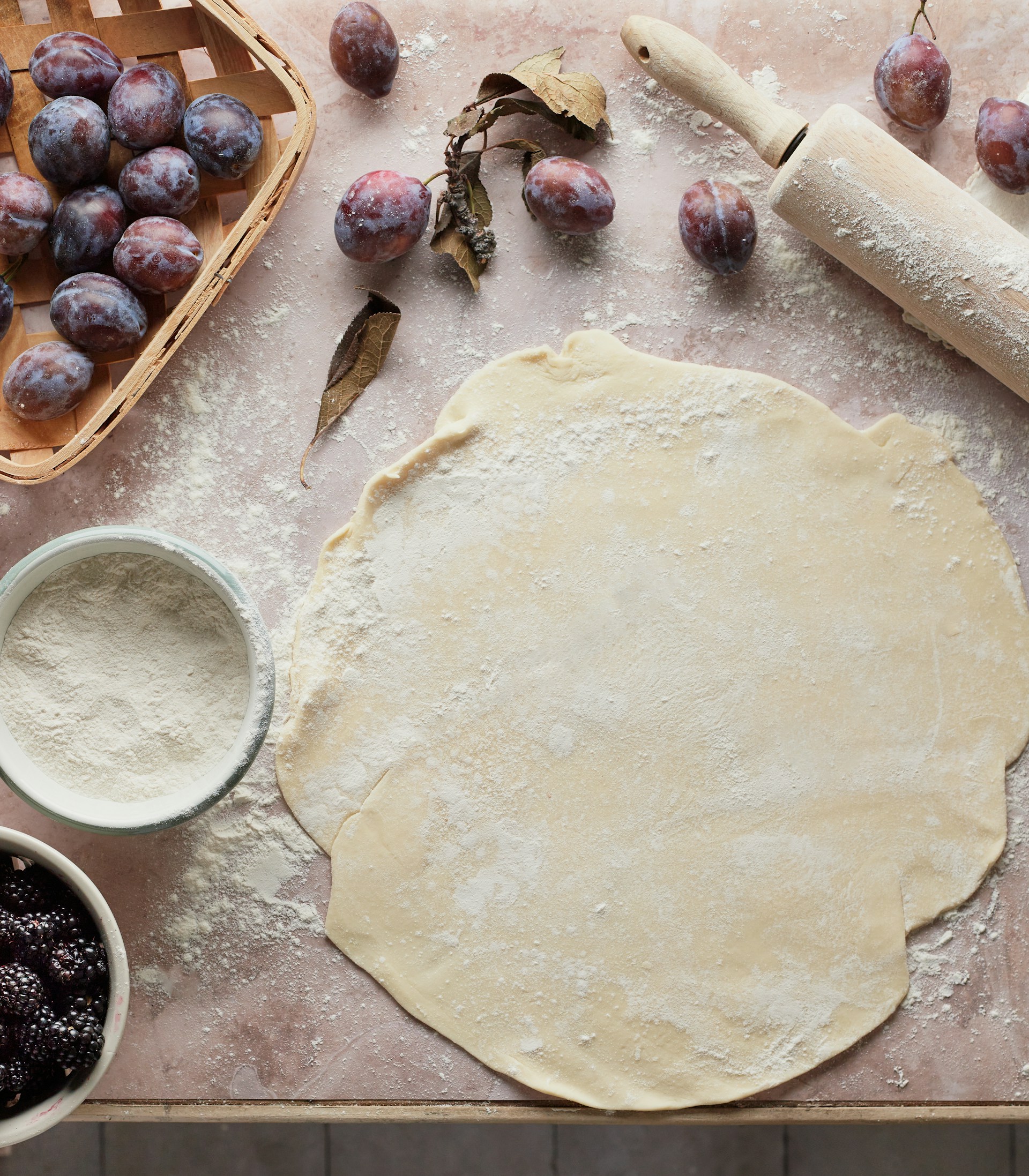
There are certain things I still love about rustic food photography: flour on a work surface, imperfect pastry, fruit with leaves and stems, handmade ceramics, natural linen and surfaces that have some character.
What interests me now is allowing those things to feel like part of the world rather than props chosen to create an aesthetic. A little flour around pastry can tell us that someone has been working there. An uneven pastry edge can show the handmade nature of the food. A few leaves attached to fruit can make the ingredients feel less processed and more natural.
But I don't think imperfection automatically makes a photograph feel authentic. If flour has been sprinkled purely because the photograph needs to look rustic, it can feel decorative. If a spoon is there simply because an old spoon is expected in a rustic photograph, it doesn't necessarily add anything.
I often find myself asking: Does this element tell me something, or is it simply telling me that the photograph is supposed to be rustic?
Rustic doesn't mean everything has to be rustic
I've also become much more comfortable mixing rustic elements with cleaner or more contemporary ones. A weathered wooden surface doesn't need an old plate, an old spoon and a vintage glass beside it. A handmade ceramic bowl can work beautifully with a simple modern utensil, and a natural linen can sit alongside something more polished. In fact, I often think that contrast makes the rustic elements feel more believable. When every object in the frame belongs to exactly the same rustic vocabulary, the photograph can start to feel like a set that has been deliberately assembled to look rustic. One convincing element can often do more than five decorative ones.
Rustic can still be abundant
This is also where rustic connects with something I've been thinking about more generally in my food photography: abundance. A rustic image can absolutely be abundant. It can contain plenty of ingredients, fruit, tools and seasonal details. But abundance doesn't mean that every available space needs to be filled with rustic props, and I've become more aware of the difference between the two. Rustic describes the character of the image, while abundance describes how much the image contains. They can work beautifully together, but they don't have to. An image can be rustic and restrained, rustic and abundant, or even rustic and quite clean. The brief can determine where I push the dial. What matters to me is that the elements still have a relationship with one another.
What I want rustic to feel like now
I think that's what makes me excited about seeing rustic appear in briefs again. I'm not interested in abandoning everything I loved about my earlier rustic work. I still love the old utensils, natural materials, seasonal ingredients, texture and a little bit of imperfection. I simply want to be more selective about how I use them.
If I'm photographing the process, I want the styling to follow the process. If I'm photographing the finished dish, I have more freedom to create the world around it. If I'm creating abundance, I don't need to fill the frame with props. And if I'm using something because it is beautiful, I still want to ask whether it actually belongs in the story I'm telling.
For me, that's the difference between rustic and rustic-themed. Rustic doesn't need to be removed. It just needs a little more intention, and perhaps that's why I'm happy to see it coming back. I get to return to something I genuinely love, but I don't have to make it the way I used to.
The rustic can stay. The excess doesn't have to.

Leave a Reply